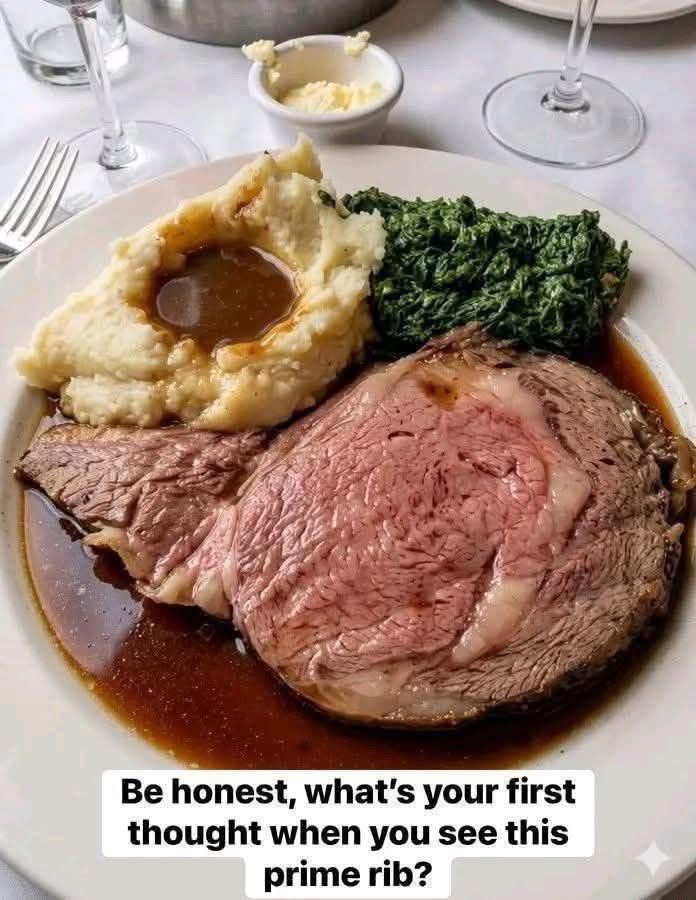
Here is a complete guide to Prime Rib Perfection, structured as requested.
Introduction
Prime rib, also known as a standing rib roast, is the pinnacle of celebratory roasts. Cut from the cow’s primal rib section, this bone-in or boneless cut delivers an unmatched combination of a crunchy, herb-crusted exterior and an impossibly tender, juicy, medium-rare interior. Cooking it properly transforms a holiday meal into a legendary feast.
Origin
Prime rib originated in Great Britain, where the “standing rib roast” became a Sunday dinner staple for the upper class. English cooks would slow-roast the forequarter cut over an open spit, basting it in its own fat. The dish traveled to America with colonists and became synonymous with Christmas, Easter, and New Year’s dinners. The term “prime” refers both to the USDA quality grade (Prime – highest marbling) and the cut’s premier status.
Cultural Significance
In North America, prime rib is the centerpiece of luxury buffets, upscale steakhouses, and family holiday tables. It symbolizes abundance, hospitality, and tradition. Cutting the roast tableside is a theatrical moment of togetherness. In the UK, it’s the classic Christmas roast with Yorkshire pudding, while in the US, it dominates Easter and Father’s Day menus.
Ingredients Quantity (for a 4-5 lb / 2-rib roast, serving 4 people)
· 1 (4-5 lb) bone-in prime rib roast (2 ribs)
· 2 tbsp kosher salt (preferably 24-48 hours in advance)
· 1 tbsp freshly ground black pepper
· 4 cloves garlic, minced
· 2 tsp fresh rosemary, finely chopped
· 2 tsp fresh thyme, finely chopped
· 2 tbsp olive oil or softened unsalted butter
Optional Additions
· Compound butter: 4 tbsp butter + horseradish or blue cheese.
· Herb crust: Add oregano, sage, or parsley.
· Red wine jus: Deglaze pan with 1 cup beef broth + ½ cup red wine.
· Vegetables: Roast onions, carrots, and celery underneath the rack.
· Smoked paprika: 1 tsp for a subtle smoky flavor.
Tips for Success
Bring to room temperature – Let roast sit out for 2-3 hours before cooking.
Low & slow then high heat – Start at 200°F (93°C) for even doneness, then sear at 500°F (260°C) for crust.
Use a meat thermometer – Target 120°F (49°C) for medium-rare, then rest.
Rest uncovered or tented – Rest 20-30 minutes; tenting traps steam and softens crust.
Don’t open the oven – Keep heat consistent during the low-temp phase.
Instructions
Dry brine – Pat roast dry. Mix salt, pepper, garlic, rosemary, and thyme. Rub all over meat. Refrigerate uncovered for 24-48 hours (or at least 1 hour).
Bring to room temp – Remove from fridge 2-3 hours before cooking.
Preheat oven – Set to 200°F (93°C).
Sear (optional but recommended) – In a hot pan with oil, sear fat cap and sides 1-2 minutes each until brown.
Roast low – Place bone-side down on a rack in a roasting pan. Insert thermometer into center. Roast until internal temp reaches 118-120°F (48-49°C) – about 3-4 hours for a 4-5 lb roast.
High-heat finish – Remove roast. Increase oven to 500°F (260°C). Return roast for 6-10 minutes until crust forms.
Rest – Remove roast, loosely tent with foil (or not at all for crispier crust), rest 20-30 minutes. Temp will rise to 128-130°F (53-54°C).
Carve – Slice between bones. Serve with jus or horseradish cream.
Description
Prime rib is visually stunning: a mahogany-brown, peppery crust giving way to a uniform rosy-pink interior. Each slice is succulent, beefy, and fork-tender, with pockets of melted fat adding richness. The aroma is a seductive blend of roasted garlic, fresh herbs, and caramelized beef drippings.
Nutritional Information (per 4 oz / 113g serving, trimmed of excess fat)
· Calories: ~350-420
· Protein: 30g
· Fat: 26g (Saturated: 11g)
· Carbohydrates: 0g
· Sodium: 500-700mg (varies with brine)
· Iron: 15% DV
Conclusion
Prime rib perfection demands patience, precision, and quality meat – but the payoff is extraordinary. A correctly executed roast needs no heavy sauce; its own juices and seasoning sing. Whether for Christmas or a casual Sunday, this dish creates lasting memories.
Recommendation
Choose a bone-in, USDA Prime or Choice roast from the small end (first 2-4 ribs) for better marbling and easier carving. Invest in a reliable leave-in probe thermometer. For a smaller group, a 2-rib roast works perfectly. Serve with creamy horseradish, au jus, and a bold red wine like Cabernet Sauvignon.
Embracing Healthful Indulgence
Enjoy prime rib mindfully: choose a 4-6 oz portion, pair with roasted vegetables and a crisp salad, and trim visible fat. Use herbs and garlic instead of excess butter for flavor. The high protein and iron content support satiety and energy – a perfect example of quality over quantity. Reserve leftovers for nutrient-dense beef and vegetable soup