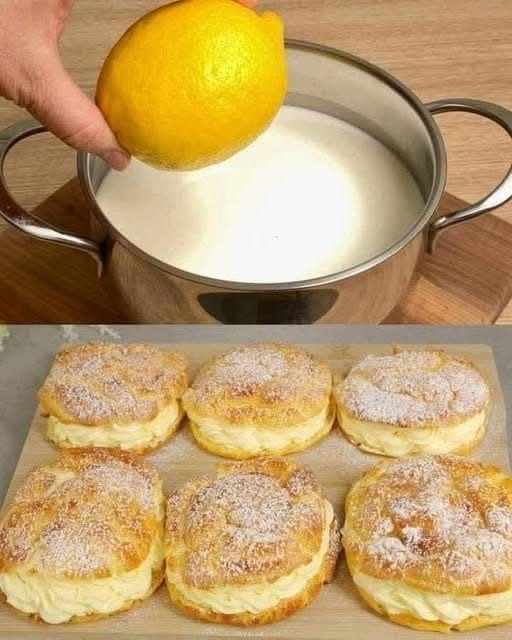
Light, golden choux shells filled with a silky mascarpone‑lemon cream, finished with a dusting of confectioners’ sugar and an optional glossy lemon glaze. The shells are airy and hollowed to create pockets for the rich filling; the filling balances mascarpone’s creamy weight with fresh lemon juice and zest for brightness, producing a dessert that feels indulgent yet refreshingly citrusy. This recipe walks through making stable choux pastry, a lemon‑infused custard base, folding technique to keep mascarpone airy, simple glazing and plating options, troubleshooting, storage guidance, and creative variations for seasonal presentation. It’s designed to yield reliably crisp shells with a smooth, scoopable filling that holds up for service or small gatherings.
Ingredients
Choux pastry (yields about 24 medium puffs)
Water: 240 ml (1 cup)
Whole milk: 60 ml (1/4 cup)
Unsalted butter: 115 g (1/2 cup), cut into pieces
Fine sea salt: 1/2 teaspoon
Granulated sugar: 1 teaspoon (optional; helps with browning)
All‑purpose flour: 150 g (1 1/4 cups), sifted
Large eggs: 4, at room temperature (you may need an extra small egg depending on dough consistency)
Mascarpone lemon filling
Mascarpone cheese: 450 g (about 1 pound), cold but slightly softened
Heavy cream (35%): 200 ml (about 3/4–1 cup), cold
Caster sugar (or superfine): 75–90 g (1/3–1/2 cup), adjust to sweetness preference
Lemon zest: 2 teaspoons finely grated (from 1–2 lemons)
Lemon juice: 2–3 tablespoons (freshly squeezed)
Vanilla extract: 1 teaspoon
Optional: 1 tablespoon Limoncello or a mild liqueur (optional for flavor lift)
Stabilizer (optional for prolonged display): 1 teaspoon powdered gelatin bloomed in 2 tablespoons cold water or 1½ teaspoons instant clear jel dissolved into the cream step
Lemon glaze (optional)
Confectioners’ sugar: 200 g (about 1 1/2 cups)
Fresh lemon juice: 2–3 tablespoons (adjust for viscosity)
Lemon zest: 1/2 teaspoon for garnish
Milk or water: 1–2 teaspoons to adjust thickness
Optional: yellow food coloring for brightness
Finishing
Confectioners’ sugar for dusting
Candied lemon slices, chocolate curls, or toasted almond slivers for garnish (optional)
Equipment
Heavy saucepan, wooden spoon or silicone spatula, baking sheet(s) lined with silicone mats or parchment, piping bags with medium round tip (1 cm), mixing bowls, whisk, electric mixer (hand or stand), small saucepan for glaze, thermometer if available.
Instruction
Preparing the choux pastry — step by step
Preheat oven and prepare pans
Preheat oven to 200°C (400°F). Line two baking sheets with silicone mats or parchment paper. Fit a piping bag with a medium round tip and set aside.
Make the panade (flour paste)
In a medium heavy saucepan combine water, milk, butter, sugar, and salt. Bring to a vigorous simmer over medium heat until the butter melts and the mixture just begins to boil. Immediately remove from heat and add the sifted flour all at once. Stir vigorously with a wooden spoon or silicone spatula until the mixture forms a smooth ball and pulls away cleanly from the pan sides. Return the pan to low heat and cook the paste, stirring constantly, for 30–60 seconds to dry it slightly — you’ll see a thin film form on the bottom of the pan.
Incorporate the eggs
Transfer the panade to a bowl and allow to cool for 3–5 minutes so it won’t scramble the eggs. Add beaten eggs one at a time, mixing thoroughly after each addition until the dough is smooth, glossy, and just soft enough to hold a soft peak when lifted on the spatula. The final dough should fall in a thick ribbon and be pipeable; if too stiff add a little beaten egg, if too loose let it sit a minute to firm slightly.
Pipe and bake the shells
Transfer dough to the prepared piping bag. Pipe 1½‑ to 2‑inch rounds about 2 inches apart (for medium éclairs or profiteroles, pipe longer 3–4 inch logs). Smooth any peaks with a wet fingertip for even browning. Lightly mist or brush with water and sprinkle with a pinch of sugar for sparkle (optional). Bake at 200°C (400°F) for 10–12 minutes, then lower oven to 180°C (350°F) and bake an additional 15–18 minutes until shells are puffed and deeply golden. Avoid opening the oven during early baking; steam lift is essential to create hollow shells.
Dry the shells thoroughly
To ensure crispness, once the shells are golden and cooked through, remove them from the oven and pierce each shell with a sharp knife to release steam, then return them to the oven turned off with the door slightly ajar for 10–15 minutes to dry the interiors. Cool completely on a rack before filling.
Make the mascarpone lemon filling
Whip the cream and flavor it
In a chilled bowl, whisk the cold heavy cream with 20–30 g of the caster sugar to medium‑stiff peaks. Chill until needed. In another bowl, blend mascarpone with the remaining caster sugar, lemon zest, lemon juice, and vanilla on low speed until smooth and slightly loosened — avoid overbeating mascarpone, which can become grainy. If using Limoncello add it now.
Stabilize (optional)
If using gelatin: bloom 1 teaspoon gelatin in 2 tablespoons cold water for five minutes, then warm gently until dissolved. Temper a spoonful of the mascarpone mixture into the gelatin, then fold the gelatin into the mascarpone evenly. If using instant stabilizer follow the package directions to dissolve and combine.
Fold whipped cream into mascarpone
Gently fold about a third of the whipped cream into the mascarpone to lighten it, then fold in the rest with wide, gentle strokes to maintain aeration. The final filling should be smooth, pipeable, and hold soft peaks — bright with lemon but creamy in body.
Prepare the lemon glaze (optional)
Make the glaze
Sift confectioners’ sugar into a bowl and whisk in lemon juice gradually until a thick but pourable glaze forms. Add a teaspoon of milk or water to adjust texture for drizzling versus coating. Warm slightly if needed to loosen for pouring; cool before using if too runny. Add zest or a tiny pinch of salt to balance sweetness.
Assemble the cream puffs
Fill the shells
Transfer mascarpone filling to a piping bag fitted with a small tip. For neat presentation, split the shells horizontally with a sharp serrated knife and pipe a generous layer of filling onto the bottom half; replace the top and dust with confectioners’ sugar. Alternatively, poke a small hole in the base and pipe filling directly into shells until soft expansion is felt. For glazed puffs, dip the tops in lemon glaze and allow to set for a minute before stacking or garnishing.
Garnish and serve
Arrange cream puffs on a serving platter, dust with confectioners’ sugar, and decorate with candied lemon slices or toasted almonds for contrast. Serve immediately or chill briefly, but avoid long refrigeration that can soften the choux shell unless you prefer softer texture.
Servings
Makes approximately 24 medium cream puffs (1½–2 inch).
Serving suggestion: 2–3 puffs per person as part of a dessert course; 3–4 puffs work well for a more generous serving or afternoon tea.
Note
Texture, timing, and troubleshooting
Common choux issues and fixes
Dough too runny: allow panade to cool slightly before adding eggs; if still loose, add a small additional sifted tablespoon of flour and cook briefly, then incorporate eggs.
Shells collapse: insufficient baking time or oven temperature too low; ensure initial high temperature and avoid opening oven early. Overcrowding and overly large pipes can also cause collapse.
Chewy or soggy shells: ensure complete internal drying after baking by returning shells to the switched‑off oven with door ajar; fill shortly before serving to preserve crispness.
Filling stability and flavor balance
Overly runny filling: use a stabilizer (gelatin or instant stabilizer), chill mascarpone and cream bowls, and ensure mascarpone is cold but softened. Add a tablespoon of mascarpone to adjust firmness rather than more whipped cream.
Excessively tangy or flat lemon flavor: balance lemon juice with extra zest for aromatic lift without thinning the filling. A teaspoon of lemon curd folded into the mascarpone can intensify flavor and color without significantly altering texture.
Storage and make‑ahead
Choux shells: Bake and store completely cooled and dry in an airtight container up to 2 days; to refresh, warm briefly in a 160°C (325°F) oven for 3–4 minutes.
Filling: Make up to 24 hours ahead and keep chilled. Fold fresh whipped cream in just before filling for maximum loft.
Assembling ahead: For events, fill cream puffs no more than 4 hours before serving to maintain shell texture; if longer storage needed, fill and freeze arranged on a tray for 1 hour, then transfer to a sealed container and freeze up to 1 month; thaw in refrigerator before serving.
Variations and serving ideas
Limoncello Cream Puffs: Add 2 tablespoons Limoncello to the filling and top with lemon glaze for an adult twist.
Lemon Curd Core: Pipe a small dollop of lemon curd into the center before adding mascarpone for a burst of concentrated lemon.
Chocolate‑Dipped: Dip puff tops in tempered dark chocolate instead of glaze for contrast; dust with sea salt.
Seasonal: Replace lemon with blood orange zest and juice in winter or add a few fresh berries to the filling for summer.
Other recipes
Classic Choux with Vanilla Pastry Cream: Use a traditional pastry cream (crème pâtissière) in place of mascarpone for a classic profile.
Éclair with Mascarpone Coffee Filling: Pipe long éclairs with espresso‑infused mascarpone cream and coat with coffee glaze.
Profiterole Tower with Warm Chocolate Sauce: Serve filled profiteroles stacked with hot chocolate sauce poured over at the table for an impressive presentation.
This Lemon Cream Puffs with Mascarpone Filling recipe pairs delicate pastry technique with bright citrus flavor and rich Italian cheese to create a dessert that’s elegant yet approachable. With attention to temperatures, gentle folding, and careful timing, it produces crisp shells and a luscious filling that will impress at gatherings and make everyday teatime feel celebratory.